
Supporting the Electrification of Hamburg’s Ferry Network
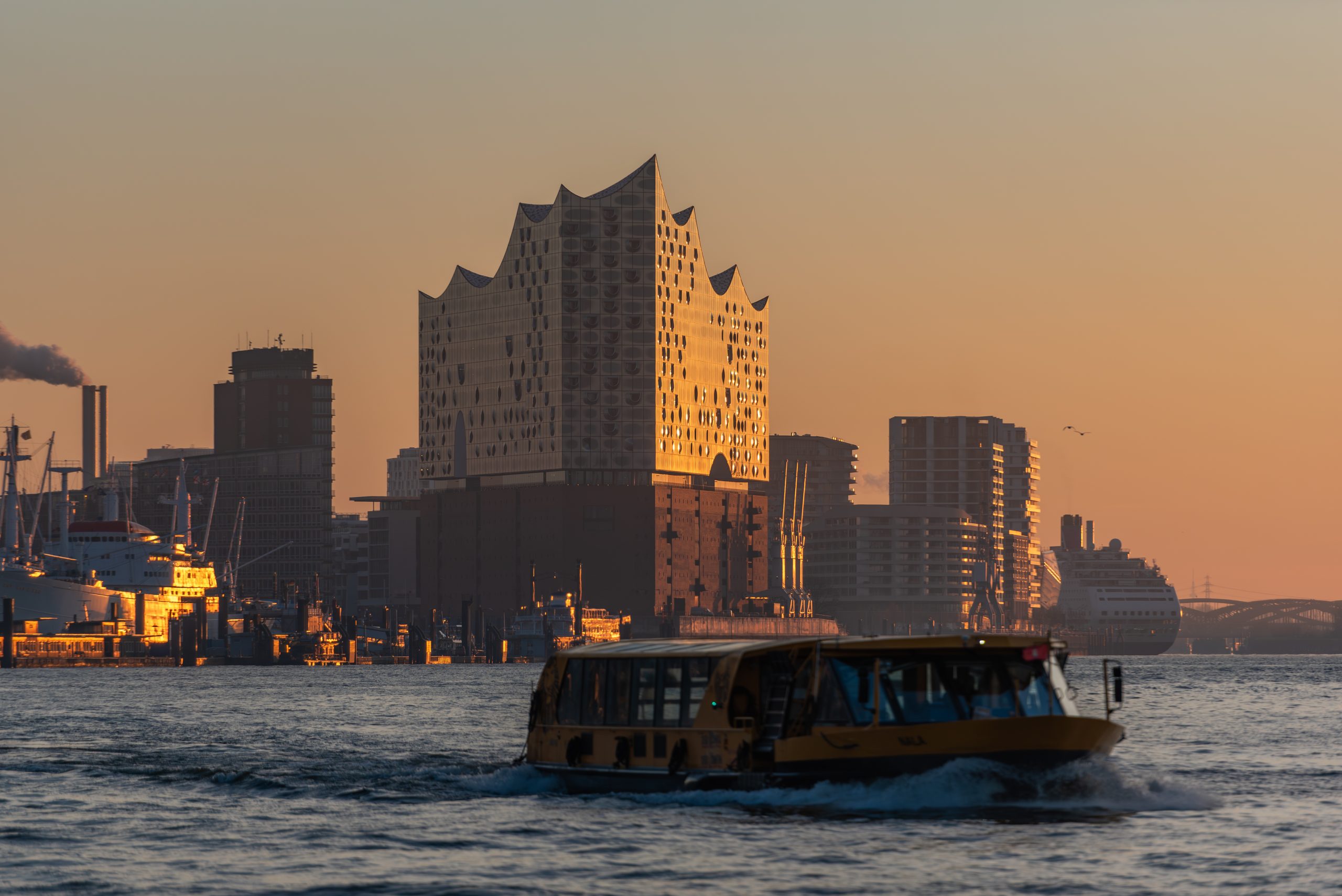
As Hamburg accelerates its journey towards climate neutrality, Actemium has delivered a high-performance charging infrastructure to support the electrification of the city’s ferry network. Designed for the unique challenges of a busy harbour environment, this innovative solution enables the transition to hybrid and fully electric vessels, helping reduce emissions and drive more sustainable urban mobility.
As cities work to reduce emissions from public transport, electrifying ferry networks is an important step towards cleaner mobility. Replacing diesel-powered vessels with hybrid and fully electric ferries can help reduce CO₂ emissions, air pollution and noise in busy urban harbours.
As Hamburg moves towards climate neutrality by 2040, the city is progressively electrifying its ferry network. To support HADAG, a Hamburg-based ferry operator and part of the city’s integrated public transport network (HVV), in its transition towards hybrid and fully electric vessels, Actemium designed and installed new high-performance charging infrastructure at the St. Pauli Landungsbrücken ferry terminal, near Hamburg’s famous fish market.
Through this project, Actemium contributes to the electrification of urban maritime public transport and supports the transition towards more sustainable mobility and a Net Zero future.
A charging infrastructure designed for the harbour environment
The project combines medium and low-voltage infrastructure with a flexible charging system designed specifically for the demanding conditions of a working harbour.
The installation includes a 4 MW transformer, capable of delivering up to 6,300 A of charging current, as well as approximately 1 km of cable routes across a three-part floating pontoon system. The infrastructure is designed to support up to ten vessels, anticipating the future development of HADAG’s fully electric ferry fleet.
The 4 MW transformer is housed in a robust maritime enclosure and equipped with a water-based cooling system. This solution makes it possible to manage the heat generated within the compact container while meeting the shock and vibration requirements of a marine environment.
Flexible charging for moving vessels
One of the key challenges was to ensure reliable connections despite the movement of the ferries. Vessels do not always stop at exactly the same position and may approach the terminal forwards or backwards.
To address this, Actemium installed a Vahle Stinger system. The charging units can move along the pontoon, allowing operators to position the connection according to where each vessel is moored. A dedicated communication system also enables data to be exchanged with the vessels, including state of charge and charging speed.
The floating infrastructure itself is designed with redundancy in mind. Each of the three 60 × 12 m pontoons contains separate buoyancy chambers, while around 70 sensors continuously monitor their condition and help detect potential leakage at an early stage.
Engineering for challenging conditions
Building electrical infrastructure on a floating structure in the Port of Hamburg required careful planning and coordination. The project had to take into account tides, storm surges and restrictions on harbour construction work during the storm surge season.
Large equipment also had to be transported directly by water. The 40-foot low-voltage container, weighing around 40 tonnes, was installed on the floating platform using a vessel equipped with a 110-tonne crane.
Actemium was responsible not only for the electrical installation, but also for the programming and automation of the system. This includes communication with the vessels, control systems, automation and lighting, providing an integrated solution from engineering through to commissioning.
Driving the Net Zero transition
By enabling the electrification of Hamburg’s ferry network, Actemium is contributing to the Net Zero transition, helping make maritime transport more sustainable through innovative electrical infrastructure and engineering expertise.